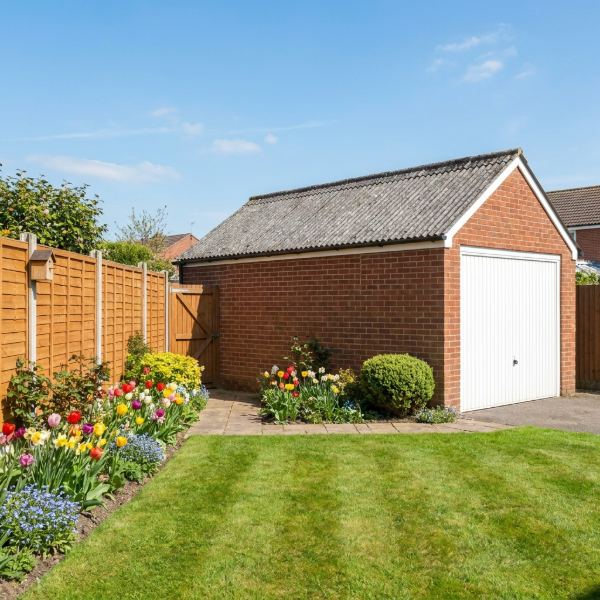
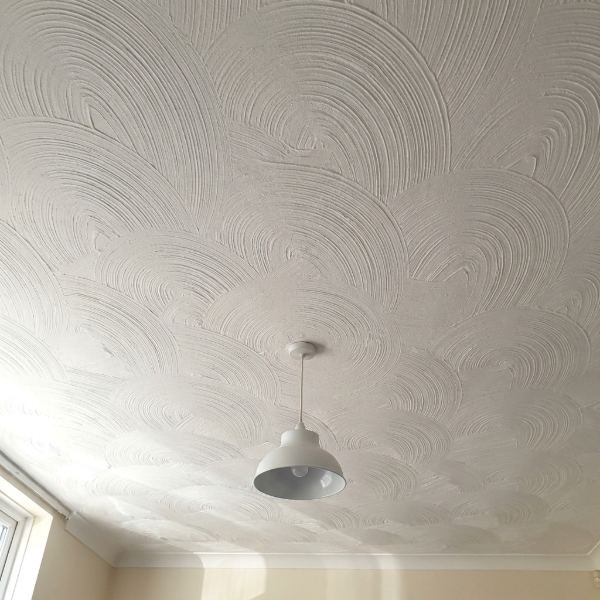
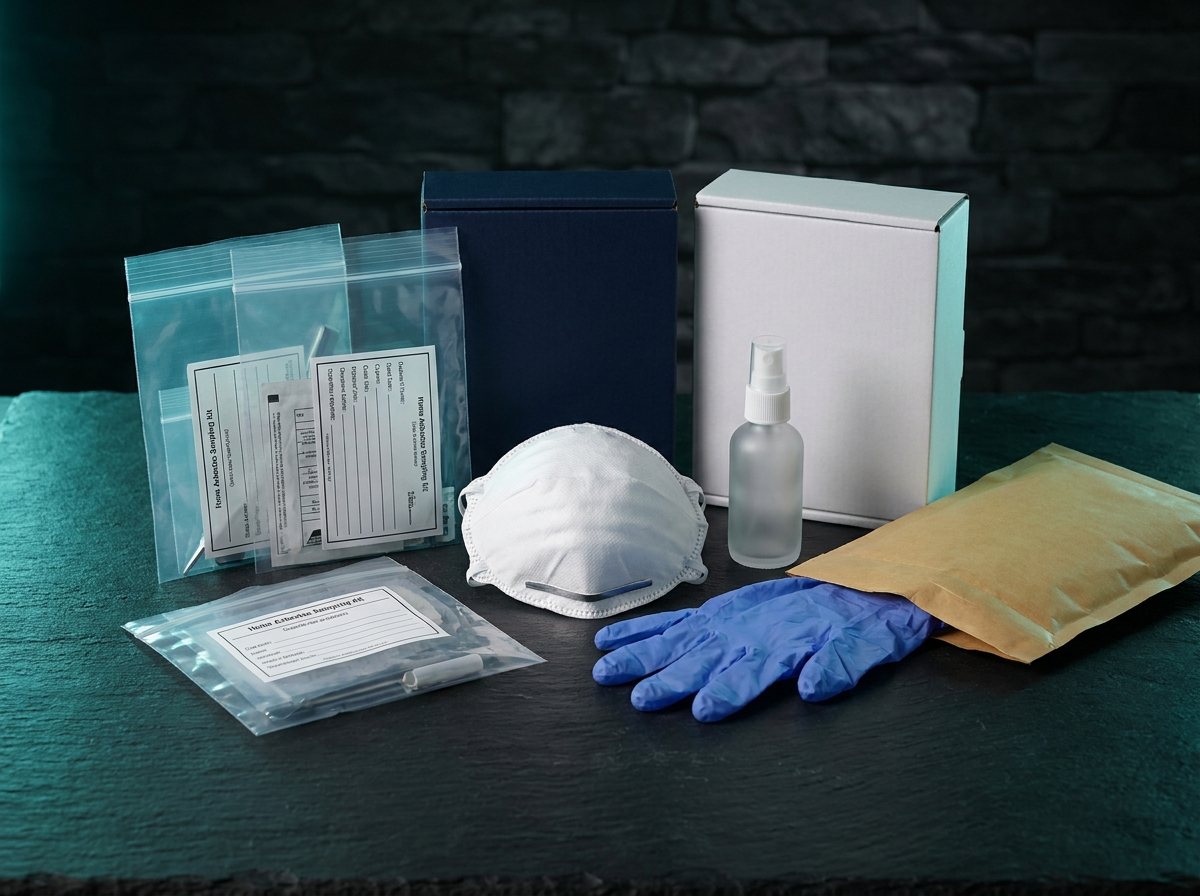
Only a lab test can tell you for sure. Your photo helps us send the right kit.
The survey report arrives, and somewhere in it is a line about asbestos. "The textured ceilings may contain asbestos." "The garage roof is likely to be asbestos cement." It's one of the most common worries we see from buyers on forums such as Mumsnet and MoneySavingExpert.
Take a breath. A line like that is common in older homes, and it's rarely a reason on its own to walk away. This page explains what it means, what to ask, and how to get facts before you commit.
This is general guidance, not legal or survey advice. Your conveyancer and surveyor know your purchase.
Why surveys say "may contain"
A standard home survey isn't an asbestos inspection. The RICS description of its Level 2 home survey says the surveyor "does not carry out an asbestos inspection", but that the report "should properly emphasise the suspected presence of asbestos containing materials if the inspection identifies that possibility". The surveyor can see a textured ceiling or a grey roof. They can't see inside it.
So "may contain" means: this is the kind of material that often did contain asbestos, in a home of this age. It isn't a finding. Only a lab can say what a material is.
It's also very common. HSE says asbestos may be part of any domestic building built or refurbished before the year 2000. The Valuation Office Agency's figures show about four in five homes in England and Wales were built before 2000.
Is it a reason not to buy?
Usually the answer depends on three questions:
- What is it, and where? A textured ceiling is very different from crumbling lagging in the cellar.
- What condition is it in? UKHSA says intact asbestos materials in a place where they're unlikely to be disturbed should not cause any harm. HSE says materials in good condition are often best left where they are.
- What are you planning? This is the big one. If you want to rip out ceilings, knock through walls or replace the floors, asbestos becomes a cost and a planning job, not just a line in a report.
A simple way to think it through
| What the survey flags | If you're keeping it as it is | If you're planning work |
|---|---|---|
| Textured (Artex) ceilings in good condition | Note it, keep it in good repair, test before any future drilling | Test before you exchange, if the seller agrees, and get quotes |
| Old floor tiles, perhaps under carpet | Leave them covered | Test a tile and the adhesive under it before lifting |
| A cement garage roof in good condition | Leave it, never climb on it, and budget for replacing it one day | Get a removal quote before you exchange |
| Boards in an airing cupboard, behind a heater, or boxing in pipes | Leave it alone and get advice | Get a surveyor to look before you commit |
| Pipe lagging, sprayed coatings, or anything damaged | Get a surveyor to look before you commit | Get a surveyor to look before you commit |
Testing before you exchange
It isn't your house yet, so you can't take samples without the seller's permission. Ask through your conveyancer or the estate agent. The usual routes are:
- The seller agrees to you, or someone you choose, taking a small sample from an out-of-the-way spot, such as a corner of a ceiling or under a loose tile.
- The seller arranges a test and shares the certificate.
- You pay for a surveyor's visit to take samples, or a fuller survey.
Build the time into your plans, and be clear in writing who is doing what. A lab result that says "no asbestos detected" for the lounge ceiling is a fact you can rely on for that ceiling. A result that finds asbestos gives you something specific to price.
Some materials should never be sampled by a buyer or seller, whoever's permission you have. See should you sample it yourself?
Questions to ask the seller
Through your conveyancer, ask:
- Has anything in the home been tested for asbestos? Can we see the certificates?
- Has any asbestos been removed or covered? Who did it, and is there paperwork?
- When were the ceilings textured, or the floors laid, if you know?
Buying a flat? Ask the managing agent or freeholder about the shared parts of the building. HSE says the legal duty to manage asbestos applies to the shared parts of some domestic buildings. The RICS survey description says that with flats, the surveyor assumes there is a dutyholder and an asbestos register. Ask to see it.
Buying in Scotland? The Home Report includes a property questionnaire filled in by the seller. mygov.scot says it covers past issues "like fire or storm damage or asbestos". Read that section.
Using a result to negotiate
If the lab finds asbestos and your plans would disturb it, a quote for removal, or for covering it, turns a worry into a number. That's something you and your conveyancer can take to the seller. Whether the price changes is a matter for negotiation. We know of no fixed rule about who pays.
If you're keeping the material as it is, a positive result may not change much at all. You'll just know what you have, and where.
After you move in
- Keep any certificates with your house papers.
- Before the first job that drills, sands, cuts or lifts anything old, test it first.
- Tell tradespeople what's been tested, and what hasn't.
- Check flagged materials now and then for damage.
- Got a survey line you're unsure about? Send us a photo of the material and the survey wording: start the free photo check.
- We'll point at what's worth testing, how many samples, and anything you shouldn't touch. Only the lab can say what a material is.
- Kits are launching soon. Your sample will be analysed by a UKAS-accredited laboratory, named on every certificate.
Questions people ask
The survey says "may contain asbestos". Should I still buy the house?
Often, yes. It depends on what the material is, its condition, and your plans. A textured ceiling you're happy to keep is very different from damaged lagging, or from ceilings you plan to rip out. Get facts before you decide: a test, or a surveyor's visit.
Can I test for asbestos before I buy?
Only with the seller's permission, because it's still their property. Ask through your conveyancer or agent. A seller may be happy with a small sample from an out-of-the-way spot, or prefer to arrange a test themselves. Some materials should only ever be sampled by a professional.
Who pays for an asbestos test when buying a house?
There's no fixed rule that we know of. It's a matter for agreement between you and the seller, so settle it through your conveyancer before anyone books anything. A seller may also choose to arrange a test and share the result.
Is it safe to live in a house with asbestos?
We can't call any home safe. UKHSA says intact asbestos materials in a place where they're unlikely to be disturbed should not cause any harm. The risk comes from damaging or disturbing them, so know where they are before any work.
Who's responsible for asbestos in the communal areas of a flat?
HSE says the duty to manage asbestos applies to the shared parts of some domestic buildings, which usually means the freeholder or managing agent. Ask them for the asbestos register for the building before you exchange.
Sources
- RICS, Description of the RICS Home Survey – Level 2 ("does not carry out an asbestos inspection"; "should properly emphasise the suspected presence of asbestos containing materials"; flats and the dutyholder), seen 23 Oct 2026: www.rics.org/content/dam/ricsglobal/documents/standards/description_of_the_rics_home_survey_level_2.pdf
- HSE, Asbestos FAQ (buildings built or refurbished before 2000; leave in place; the duty applies to the shared parts of some domestic premises), updated 2025-09-04: www.hse.gov.uk/asbestos/faq.htm
- Valuation Office Agency, Council Tax: stock of properties 2025, table CTSOP4.0 (England and Wales: 22.1 million of 27.2 million properties built before 2000, at 31 March 2025): www.gov.uk/government/statistics/council-tax-stock-of-properties-2025
- UKHSA, Asbestos: general information (intact materials), updated 15 May 2025: www.gov.uk/government/publications/asbestos-properties-incident-management-and-toxicology/asbestos-general-information
- mygov.scot, Home Report (property questionnaire covers "fire or storm damage or asbestos"), seen 23 Oct 2026: www.mygov.scot/buy-home/home-report
- Our own research notes (B), sections 4 and 5 (questions 4, 17 and 26; gap G7; forum threads on Mumsnet and MoneySavingExpert), 22–23 Oct 2026.
Updated 23 October 2026