Only a lab test can tell you for sure. Your photo helps us send the right kit.
What is Artex?
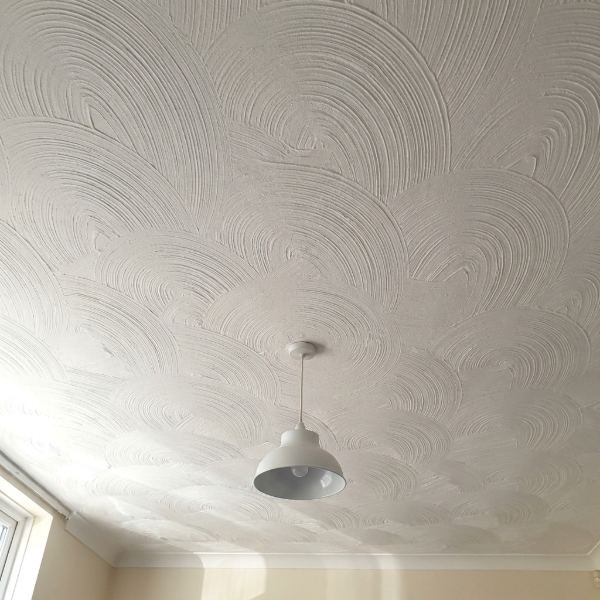
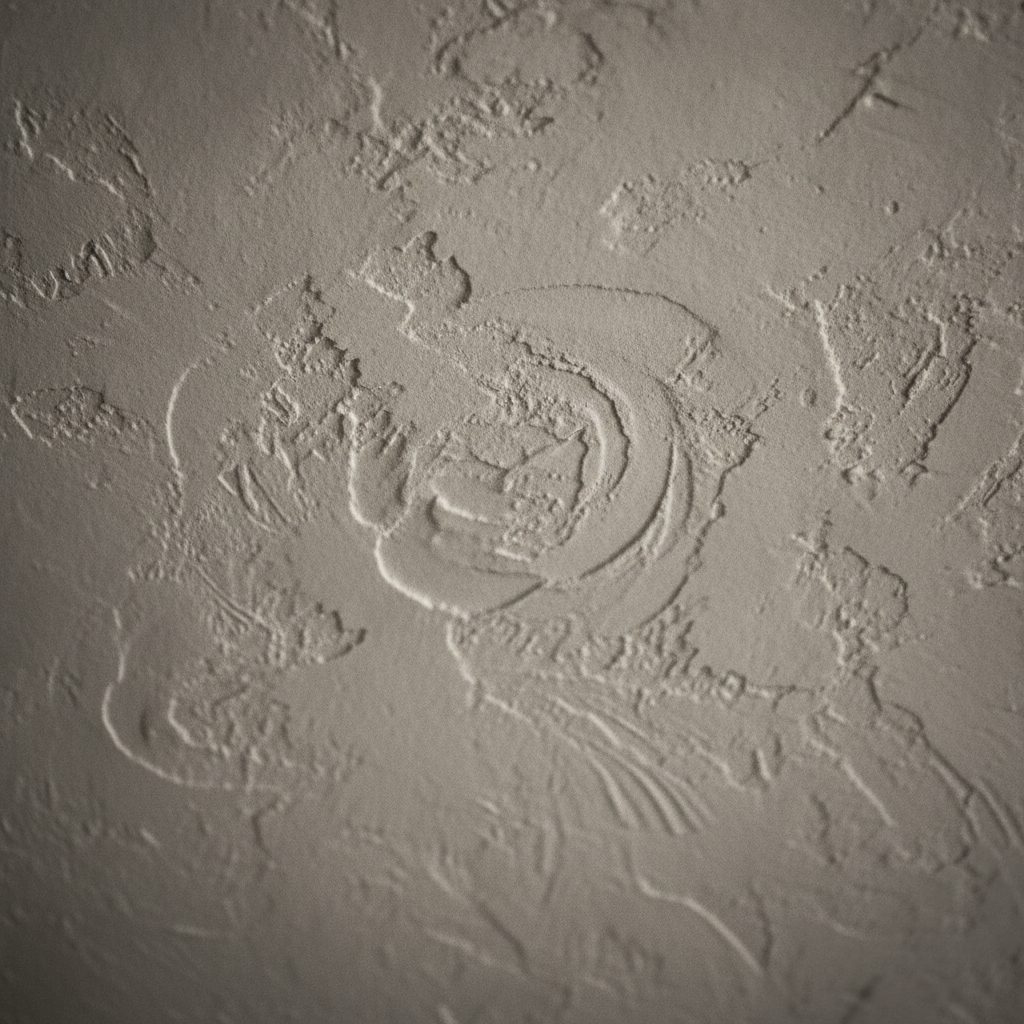
Artex is a brand name that stuck. Most people use it for any textured coating on a ceiling or wall: swirls, stipples, fans, "popcorn" bumps and patterns combed into the surface. It was hugely popular in UK homes from the 1960s to the 1980s. It went on quicker than plaster, and it hid cracks.
The same coating was often used on walls, in hallways and up stairwells, not just on ceilings.
Does Artex contain asbestos?
Some does. Until the mid-1980s, many textured coatings had a small amount of white asbestos (chrysotile) mixed in to strengthen them. Asbestos was not fully banned in the UK until 1999, so any textured coating put up before 2000 could contain it.
Plenty don't. A coating looks exactly the same either way, and painting over it doesn't change what's inside. The only way to know is to test a small sample in a lab.
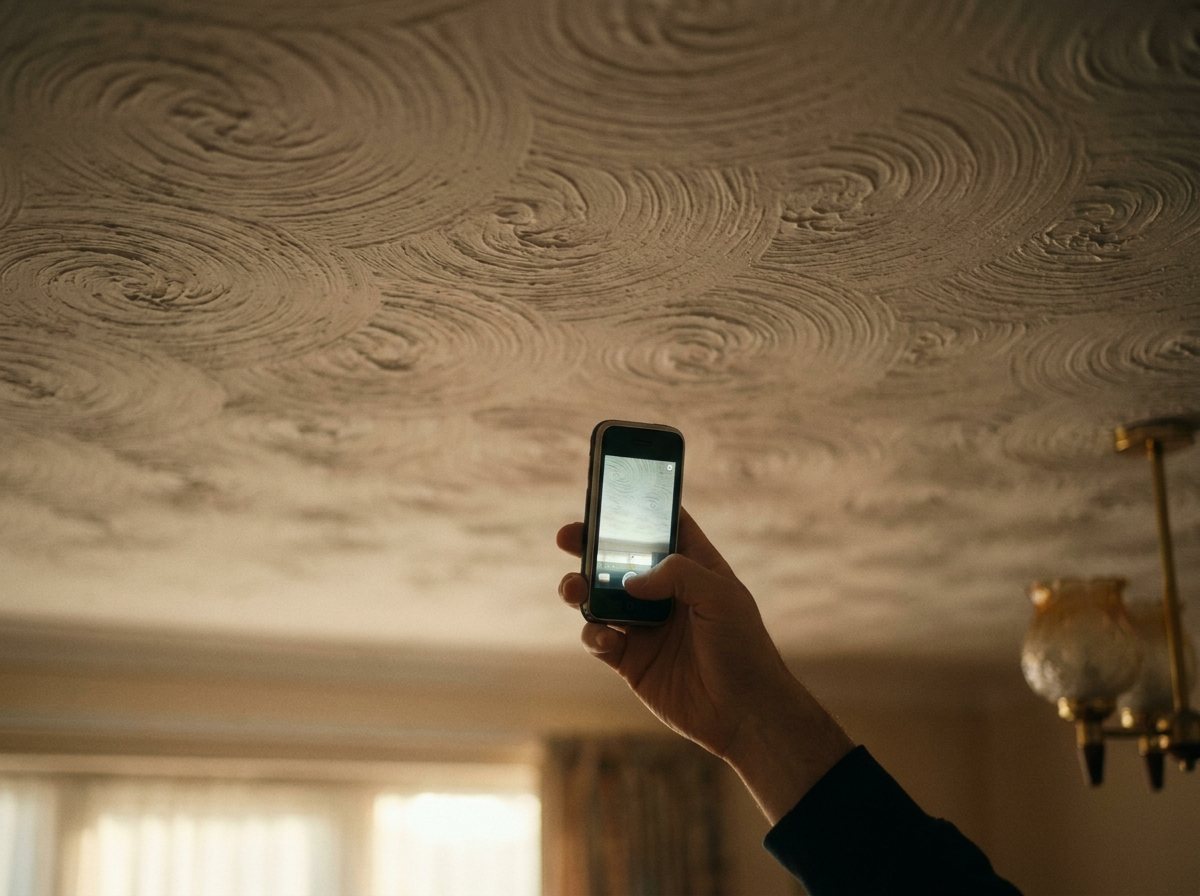
Is it dangerous?
Left alone and in good condition, it's a low risk. The fibres are locked into the coating. The risk comes when it's disturbed. Sanding, scraping, drilling, steaming or knocking the peaks off can put fibres into the air, where they can be breathed in.
Breathing in asbestos fibres can cause serious lung diseases, often many years later. That's why it's worth knowing before any work starts, not after.
When should you test it?
- Before you scrape, sand or remove it, or knock the peaks off to plaster over it.
- Before you drill into it, for example to fit new lights, a ceiling fan or curtain rails.
- Before you take down a ceiling or knock through a wall.
- If part of it is cracked, flaking or damaged.
- When you're buying, selling or renting out a home, and want an answer in writing.
How testing works
- Send us a photoUse the free AI photo check. Snap the area, answer three quick taps, and see what's worth testing and how many samples you'd need.
- Take a small sampleThe kit comes with a proper mask, gloves, sample bags, a spray bottle, a step-by-step guide and a return envelope.
- Post it to the labYour sample is analysed by a UKAS-accredited laboratory.
- KnowYour result comes to you by email, in writing.
If the ceilings in different rooms, or the walls and the ceilings, were done at different times, each one counts as a separate area. The kit is £44.99 with one lab sample, and each extra sample is £12.
Taking the sample safely
The step-by-step guide in the kit takes you through it. In short:
- Keep other people and pets out of the room while you work.
- Put on the mask and gloves before you start.
- Lightly mist the spot with water first. Damp material gives off far less dust.
- Use a hand tool, never a power tool. Take a small piece, about the size of a 20p coin, straight into the bag, and seal it.
- Wipe the area with a damp cloth, and cover the spot with tape or a dab of paint.
- Seal the cloth, gloves and mask in a bag. Your local council can tell you how to get rid of it.
If it does contain asbestos
Don't panic. The asbestos in textured coatings is usually a small amount of white asbestos, held in the coating. If it's in good condition and you're happy with it, you can leave it alone. Painting it is usually fine. Sanding it is not.
If you want it removed, or your plans mean it will be disturbed, use a professional asbestos removal contractor. Don't scrape or sand it off yourself.