Only a lab test can tell you for sure. Your photo helps us send the right kit.
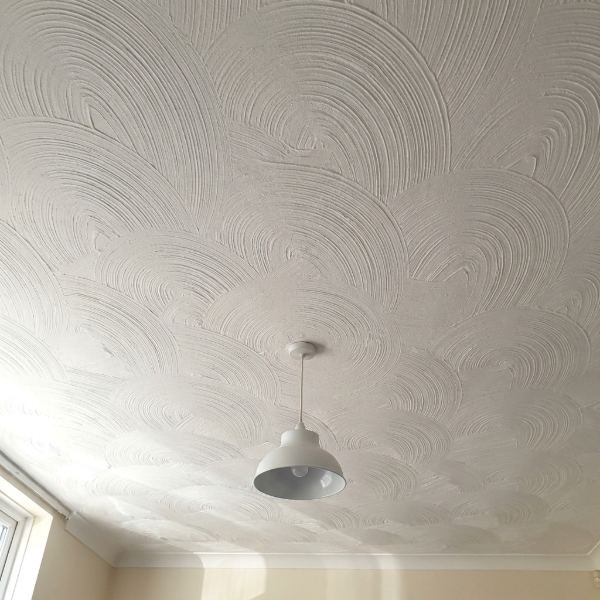
You want new lights in a swirled or stippled ceiling: downlights in the kitchen, perhaps, or a fan, a smoke alarm or a curtain track. Is it all right to drill? Here's the short version.
- If the ceiling coating went up before 2000, test it before anyone drills or cuts it.
- A screw hole and a downlight hole are very different jobs.
- If you pay someone to do the work, the law expects them to check for asbestos first.
- Don't sand it, scrape it, or cut it with a hole saw until you know what it is.
Why drilling is the moment that matters
Textured coatings such as Artex were often made with a small amount of white asbestos (chrysotile) mixed in to strengthen them. HSE's guide for asbestos surveyors puts the amount at about 3 to 5%. It says asbestos was added until about 1984, and that old stock may have been used for several years after that.
Left alone, the fibres stay locked in the coating. Drilling grinds a little of the coating into dust, and dust is how fibres get into the air you breathe.
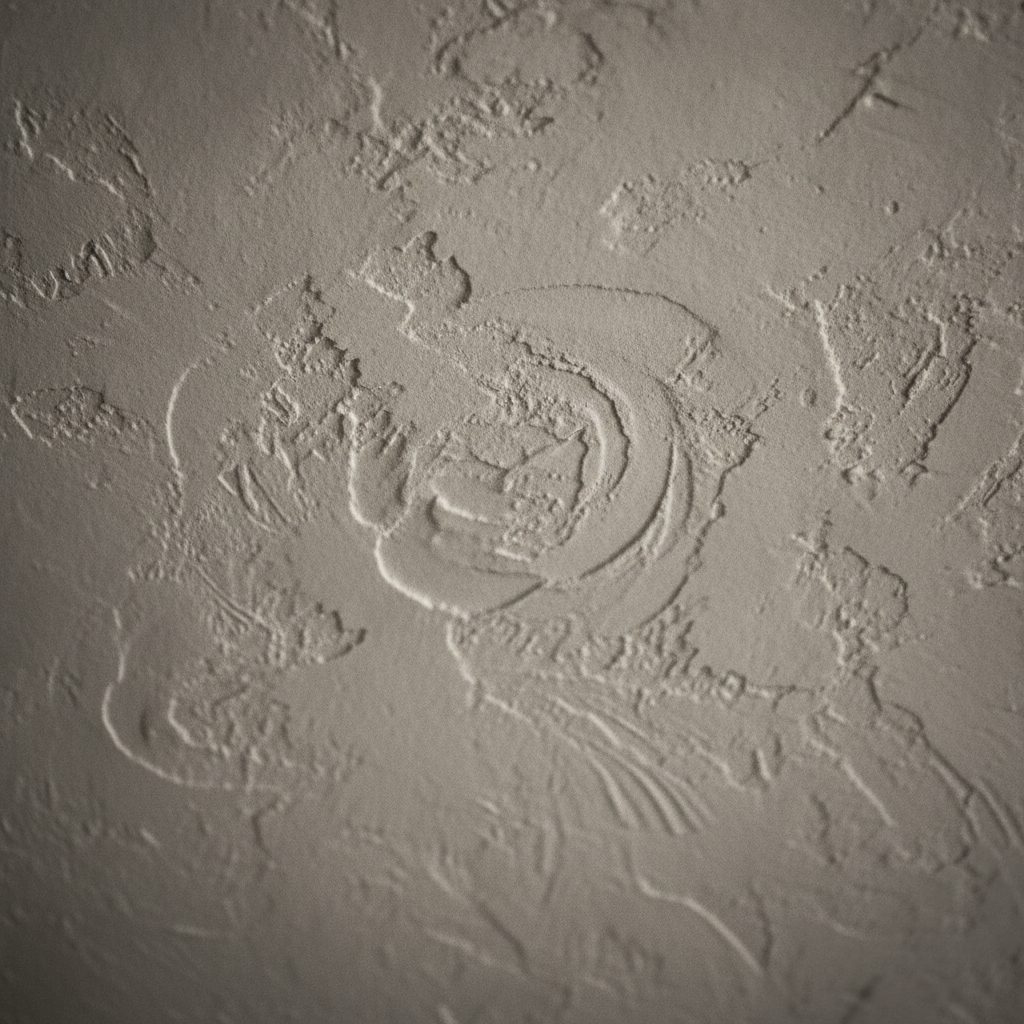
You can't tell by looking. A coating with asbestos in it and one without look exactly the same, and paint doesn't change what's underneath.
A screw hole or a downlight: not the same job
A screw or a small fixing. A smoke alarm, a hook or a curtain track needs a small hole. That makes a small amount of dust.
A downlight. The hole goes right through the coating and the ceiling board behind it, usually with a round cutter called a hole saw. Each hole is several centimetres across, and a kitchen might have six or eight of them. That's far more cutting, far more dust, and a ring of coating that comes away with each cut-out.
A ceiling fan or a heavy light. These can need a bigger hole for a fixing box, plus work in the loft above.
Taking down an old fitting. Removing an old ceiling rose or light can break the coating around it.
What HSE tells tradespeople to do
HSE publishes a task sheet for exactly this job: sheet A26, "Drilling and boring through textured coatings". It's written for people at work, not for homeowners. But it shows how carefully the dust is treated. It tells workers to:
- keep other people out of the room and close the doors;
- cover the floor and furniture with heavy polythene sheeting;
- use a hand drill if they can, or an electric drill on its slowest setting;
- cover the spot with a thick paste, such as wallpaper paste or shaving foam, or use a plastic cowl, and drill through it;
- wipe the paste and dust away with damp rags, seal the drilled edge, and bag everything as asbestos waste;
- wear a disposable overall with a hood, and a proper respirator.
HSE's own introduction to these sheets says that removing small areas of textured coating to fit smoke alarms and light fittings is not normally notifiable work. It's treated as lower-risk work, done carefully. It is not treated as nothing.
What's behind the coating matters too
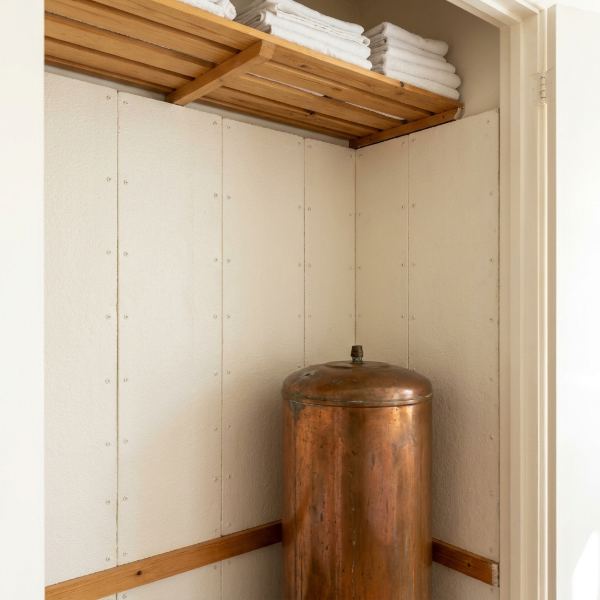
Behind the coating is a ceiling board of some kind. Usually that's ordinary plasterboard or plaster. In some older homes it can be asbestos insulation board, which needs much more care than the coating itself. HSE's sheet says that if the coating is on insulation board, a stricter sheet applies instead.
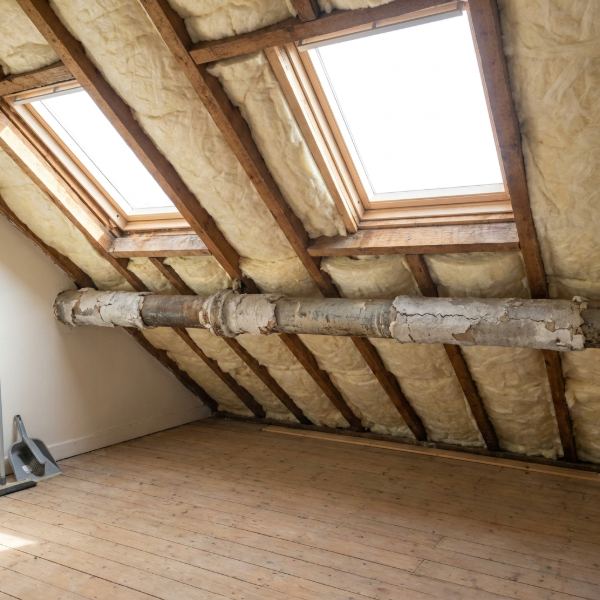
A downlight cuts straight through whatever is there. If you can see the edge of the ceiling board, through a loft hatch or an old light hole, take a photo of it too. See our guide to asbestos insulation board.
If you're paying an electrician
Your electrician is at work in your home, and the law expects them to deal with asbestos properly. Under the Control of Asbestos Regulations 2012, before maintenance work that could disturb asbestos, an employer (and that includes a self-employed tradesperson) must either assess whether asbestos is there, or assume it is and work to the rules for it. HSE lists electricians among the trades who need asbestos awareness training.
So it's fair to ask, before the job:
- "Have you done asbestos awareness training?"
- "This coating hasn't been tested. How will you treat it?"
A result in writing makes that conversation easy. If the lab finds no asbestos in that coating, they can plan the job normally. If it finds asbestos, they know to use careful methods like the ones above, or you might change the plan: fewer recessed lights, or surface-mounted fittings instead of cut-outs.
If you were planning to do it yourself
In your own home you're not "at work", so the trades rules don't bind you in the same way. The dust is the same, though. UKHSA, the UK Health Security Agency, says it does not recommend DIY removal of asbestos without advice. HSE says don't try to repair or remove asbestos materials yourself if you haven't been trained.
Our advice is simple. Test the coating before any cutting. If asbestos is found, have the holes cut by someone trained to do it.
How many samples?
One for each area of coating that looks different or was put up at a different time. If the kitchen and the hallway were textured in different years, or in different patterns, that's two samples. If you're not sure, send us a photo of each ceiling and we'll suggest a number.
To take a sample, a small piece of coating is scraped from an out-of-the-way spot after misting it with water. The kit's step-by-step guide covers it, and our Artex guide explains the basics. If the coating is flaking or crumbling, don't sample it. Send us a photo and we'll tell you what to do.
If you've already drilled
Try not to worry. HSE says that many cases of short, accidental exposure to asbestos will most likely have led to minimal exposure to fibres. Stop work. Don't sweep up, and don't use a household vacuum cleaner on the dust. Wipe surfaces with a damp cloth, and seal the cloth in a bag. Then test the coating, so you know where you stand.
If you're worried about your health, HSE suggests seeing your GP and asking for a note to be made in your record about possible exposure.
- Send us a photo of the ceiling, and of the spot where the lights will go: start the free photo check.
- We'll point at what's worth testing, how many samples, and anything you shouldn't touch. Only the lab can tell you what the coating is.
- Kits are launching soon. Your sample will be analysed by a UKAS-accredited laboratory, named on every certificate.
Questions people ask
Can I drill into an Artex ceiling?
If it went up before 2000 and hasn't been tested, treat it as if it could contain asbestos until you know. A single small hole makes little dust, but a hole saw for downlights makes a lot more. Test first, then plan the job around the result.
Do I need to test Artex before fitting downlights?
It's the best time to test. Downlights mean several large cut-outs through the coating and the board behind it. A result before the electrician arrives tells them how to work, and it's useful again if you ever sell.
I've already drilled into Artex. What should I do?
Stop, and don't sweep or vacuum the dust with a household vacuum cleaner. Wipe the area with damp cloths and seal them in a bag. HSE says most short, accidental exposures are likely to be minimal. Test the coating, and talk to your GP if you're worried.
How many samples do I need for one ceiling?
Usually one, if the whole ceiling was done at the same time in the same pattern. If part of it was patched or redone, or it joins a different ceiling, that part counts as a separate area.
When did they stop putting asbestos in Artex?
HSE's survey guide says asbestos was added to textured coatings until about 1984, and old stock may have been used for several years after. It also notes that asbestos-containing formulations were banned in 1988. That's why anything put up before 2000 is worth testing before work.
Sources
- HSE, Asbestos essentials task sheet A26, "Drilling and boring through textured coatings" (published 09/17): www.hse.gov.uk/pubns/guidance/a26.pdf
- HSE, Asbestos essentials sheet A0, "Introduction to Asbestos essentials" (notifiable work, smoke alarms and light fittings): www.hse.gov.uk/pubns/guidance/a0.pdf
- HSE, Asbestos essentials index (task sheet titles, including A1 for insulation board): www.hse.gov.uk/asbestos/essentials/index.htm
- HSE, HSG264 Asbestos: The survey guide, 2nd edition 2012, Appendix 2 (textured coatings 3–5% chrysotile, added up to 1984), para 38 (1988), para 120 (sampling textured coatings): www.hse.gov.uk/pubns/priced/hsg264.pdf
- HSE, Non-licensed work ("Drilling of textured decorative coatings for installation of fixtures/fittings"), updated 2024-02-23: www.hse.gov.uk/asbestos/licensing/non-licensed-work.htm
- The Control of Asbestos Regulations 2012, regulation 5 (identification of the presence of asbestos): www.legislation.gov.uk/uksi/2012/632/regulation/5
- HSE, Asbestos training (electricians listed among those needing awareness training), updated 2024-07-09: www.hse.gov.uk/asbestos/training.htm
- HSE, Asbestos FAQ (DIY repair and removal; inadvertent exposure; GP note), updated 2025-09-04: www.hse.gov.uk/asbestos/faq.htm
- UKHSA, Asbestos: general information (DIY removal), updated 15 May 2025: www.gov.uk/government/publications/asbestos-properties-incident-management-and-toxicology/asbestos-general-information
- Our own research notes (B), section 4, question 28 (forum demand for this topic), 22–23 Oct 2026.
Updated 23 October 2026