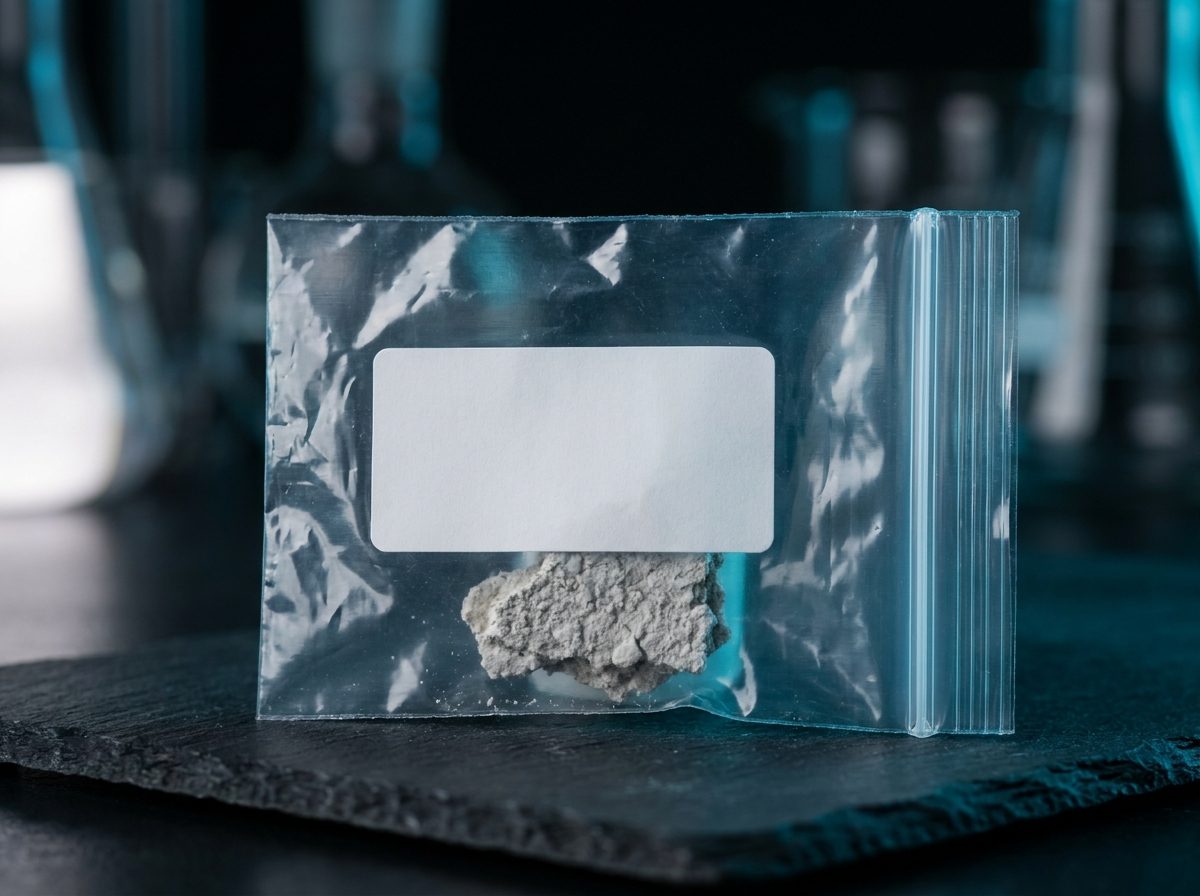
Only a lab test can tell you for sure. Your photo helps us send the right kit.
Your result comes as a written report from the laboratory, often called a certificate. They're written for professionals, so they can look technical. This page walks through one, line by line, and explains what to do with each kind of answer.
Who writes it
The laboratory that analysed your sample writes the report, and it's named on every certificate. UK asbestos law requires employers who have samples analysed to use a laboratory accredited to an international standard called ISO 17025, and that's the standard to expect for a home test too. UKAS, the United Kingdom Accreditation Service, is the national body that checks these laboratories. HSE's guide for analysts says the report should carry the UKAS accreditation symbol and number. You can look the number up on the UKAS website.
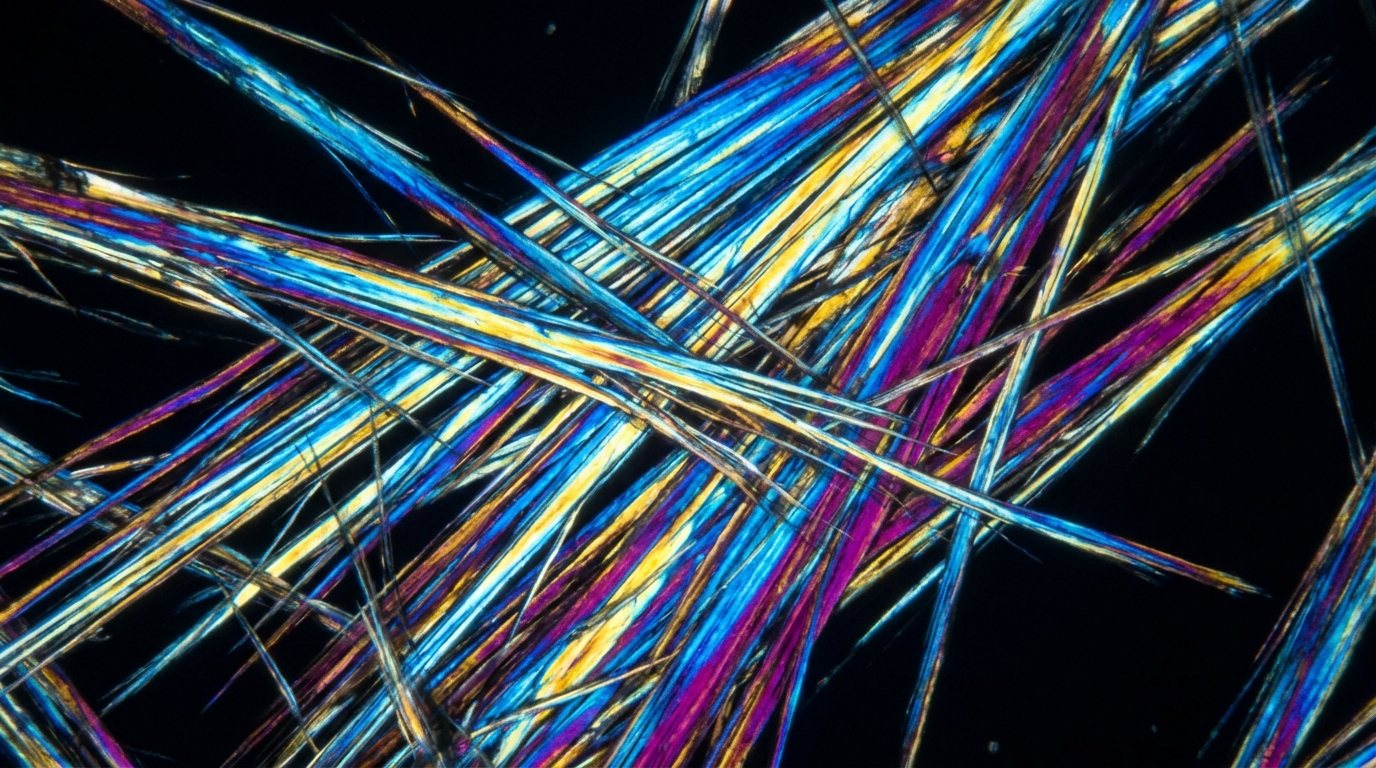
The analyst uses a method set out in HSE's analysts' guide, HSG248. It combines a low-power microscope search with polarised light microscopy, which shows each type of asbestos fibre by the way it bends and colours light.
What's on the certificate
HSE's analysts' guide lists what a report must include. Expect to see:
- the laboratory's name, address and contact details;
- its UKAS symbol and accreditation number;
- the name of the analyst, and of the person who signed off the report;
- the date and a report number;
- the method used;
- your sample number, so you can match it to what you sent;
- for each sample, whether asbestos was detected, and if so, which type;
- if your sample had layers, such as paint over a coating, which layer the asbestos was in.
Keep the certificate, and keep a note of exactly where each sample came from. A photo of the spot is ideal.
The three answers you might see
"Asbestos not detected"
The analyst searched your sample and found no asbestos fibres. HSE's guide sets a minimum search: about 10 minutes under one microscope, then at least two prepared slides examined for a further 5 minutes at high magnification. Some labs word it slightly differently, such as "no asbestos detected".
It's good news for that sample. It covers the material you sampled, not your whole home. Read what "no asbestos detected" does and doesn't mean.
"Trace asbestos identified"
During that search, the analyst saw only one or two asbestos fibres or fibre bundles. HSE's guide uses the term "trace" for exactly that.
A trace result isn't an all-clear. HSE's analysts' guide defines an asbestos-containing material as one with asbestos "above trace amounts", so a trace result sits on the line. It can mean a material with a very small amount in it, or asbestos dust that has settled on or into a material from something nearby. Treat the material with care, and talk it through with a surveyor before any work that would disturb it. If there's other suspect material close by, that may be the thing to test.
Asbestos detected, with a type
The analyst found asbestos and names the type, or types. The three you're most likely to see are:
- chrysotile (white asbestos);
- amosite (brown asbestos);
- crocidolite (blue asbestos).
Three rarer types are tremolite, actinolite and anthophyllite. The names are minerals, not colours. Read what each type means.
Why there's no percentage
People often expect a figure, such as "3% asbestos". You won't see one, and that's normal. HSE's guide says the method "is not quantitative and percentages of asbestos should not be reported." The analyst's job is to say whether asbestos is there, and which type.
If asbestos was found: what next
Take a breath. Finding asbestos in a home is common, and it's usually manageable. HSE's advice is that asbestos materials in good condition are often best left where they are and checked from time to time. UKHSA says intact asbestos materials in a place where they're unlikely to be disturbed should not cause any harm.
What you do next depends on three things: what the material is, what condition it's in, and what you're planning.
| Your situation | The usual options |
|---|---|
| It's in good condition and you're not planning work | Leave it alone. Keep an eye on it. Keep the certificate. |
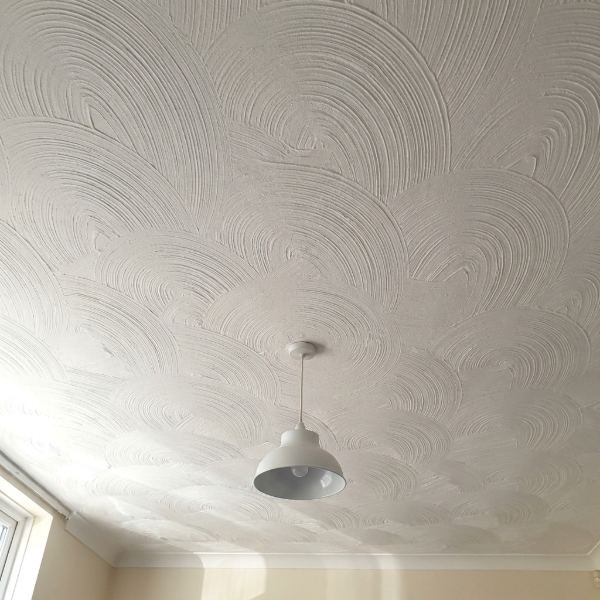
| It's in good condition but you want to decorate | Covering or sealing it is often possible without disturbing it. See skim, paint or plaster over Artex. |
| Work will disturb it (drilling, lifting, knocking through) | Tell your tradespeople before they start, and show them the certificate. Or have it removed first by a professional. |
| It's damaged or crumbling | Keep people away, don't sweep or vacuum, and get a professional to look at it. |
Licensed and non-licensed work
You'll see these words when you look for help.
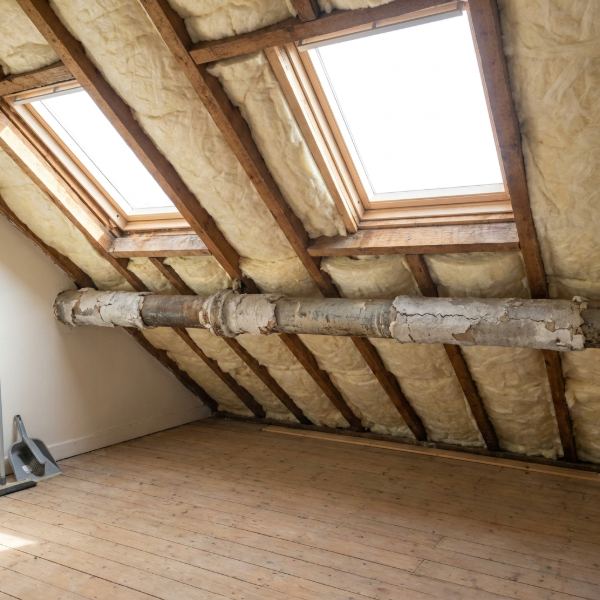
- Licensed work must be done by a contractor holding an HSE licence. It includes work on sprayed coatings, lagging, loose fill, and most work on insulation board. HSE links to a list of licensed contractors. In Northern Ireland, HSENI publishes its own list.
- Non-licensed work includes most work on textured coatings, floor tiles and asbestos cement. It can be done by a trained tradesperson using careful methods, without a licence.
The type of asbestos on your certificate matters less here than the material it's in. White asbestos in a textured coating is usually non-licensed work. Insulation board needs a licensed contractor for most jobs, whatever type it contains.
If you rent
Tell your landlord or letting agent, in writing, and send them the certificate. Don't start any work that would disturb the material. See renting and asbestos.
If you're worried about your health
If you think you've breathed in asbestos fibres, UKHSA says to seek guidance from your GP or call NHS 111. HSE suggests asking your GP to note the possible exposure in your record.
- Planning work? Show the certificate to your tradesperson before they start, with a note of where each sample came from.
- Testing more materials? Start the free photo check and we'll suggest how many samples.
- Only the lab can say what a material is. Kits are launching soon, and every sample will be analysed by a UKAS-accredited laboratory, named on every certificate.
Questions people ask
My result is positive. What happens next?
Nothing urgent, if the material is in good condition and you're not about to disturb it. Your options are to leave it and keep an eye on it, to cover or seal it, or to have it removed by a professional. Which is right depends on the material, its condition and your plans.
Do I have to remove asbestos if it's found?
No. HSE's advice is that materials in good condition are often best left in place and checked. HSE says badly damaged material that's likely to be damaged further should be removed if it can't be protected.
Will the result say which type of asbestos it is?
Yes. A UK lab report names the type or types found, such as chrysotile, amosite or crocidolite. It doesn't give a percentage, because the method isn't designed to measure amounts.
Why doesn't my certificate show how much asbestos there is?
HSE's guide for analysts says the method "is not quantitative and percentages of asbestos should not be reported". The certificate tells you whether asbestos is there and which type, which is what decides how the material should be handled.
Is it safe to live in a house with asbestos?
We can't tell you any home is safe. What UKHSA says is that intact asbestos materials in a place where they're unlikely to be disturbed should not cause any harm. The risk comes when material is damaged or disturbed, which is why knowing where it is matters.
Sources
- HSE, HSG248 Asbestos: The analysts' guide, 2nd edition 2021: Box A2.1 and para A2.30 ("asbestos not detected" and "trace asbestos identified"), paras A2.71–A2.72 (report contents; no percentages), para 4.20 (ACMs defined as above trace amounts): www.hse.gov.uk/pubns/priced/hsg248.pdf
- The Control of Asbestos Regulations 2012, regulation 21 (employers requesting analysis must use a body accredited to ISO 17025): www.legislation.gov.uk/uksi/2012/632/regulation/21
- HSE, Asbestos FAQ (leave in place; damaged material; GP note), updated 2025-09-04: www.hse.gov.uk/asbestos/faq.htm
- HSE, Non-licensed work (licensable work list; non-licensed examples), updated 2024-02-23: www.hse.gov.uk/asbestos/licensing/non-licensed-work.htm
- HSE, Asbestos essentials sheet A0 ("Non-licensed work includes most work on asbestos-containing textured coatings ... and asbestos cement"): www.hse.gov.uk/pubns/guidance/a0.pdf
- HSE, Licensable work with asbestos (link to the list of licensed contractors), updated 2024-09-09: www.hse.gov.uk/asbestos/licensing/licensed-contractor.htm
- HSENI, Contractors licensed for work with asbestos insulation or asbestos coating, updated 18 September 2026: www.hseni.gov.uk/node/1645
- UKHSA, Asbestos: general information (intact materials; GP or NHS 111), updated 15 May 2025: www.gov.uk/government/publications/asbestos-properties-incident-management-and-toxicology/asbestos-general-information
- Our own research notes (B), sections 4 and 5 (questions 13, 18, 26, 29; gap G3), 22–23 Oct 2026.
Updated 23 October 2026