Only a lab test can tell you for sure. Your photo helps us send the right kit.
"No asbestos detected" is the result most people hope for. It's genuinely good news for the material you sampled. This page explains exactly what it covers, what it can't tell you, and when it's worth testing again, so you can rely on it for the right things.
What the lab actually did
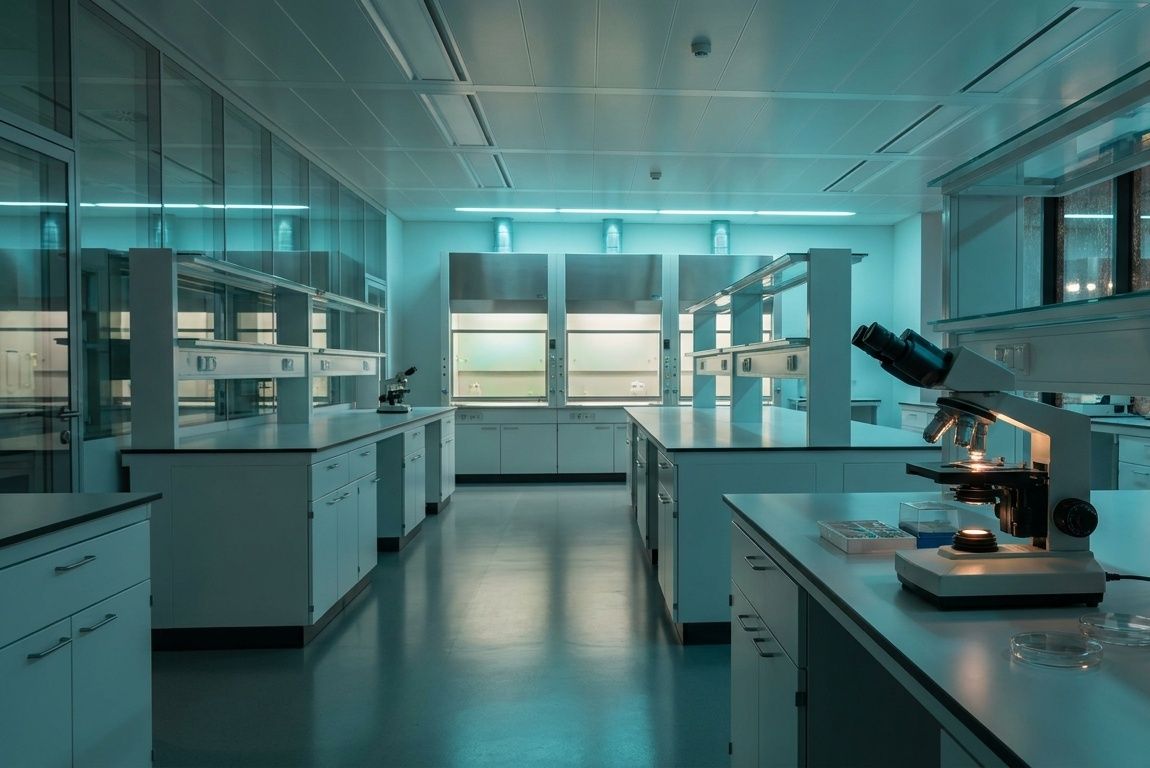
HSE's guide for asbestos analysts sets out what has to happen before a lab can report "asbestos not detected". The analyst:
- looks over the whole sample and notes whether it's one material or several layers;
- searches it carefully under a stereo microscope for around 10 minutes;
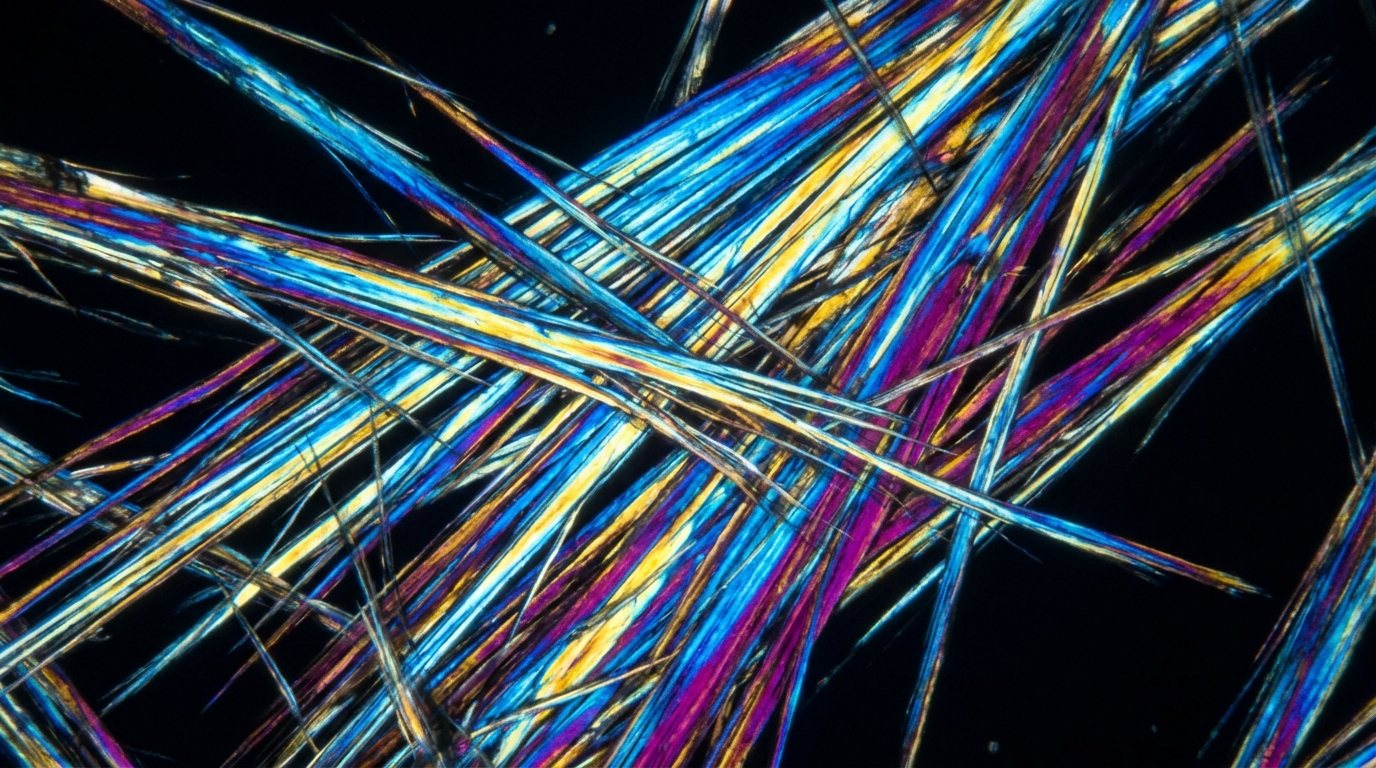
- takes small portions, prepares at least two microscope slides, and searches them at high magnification for a further 5 minutes, using polarised light to pick out any asbestos fibres.
If no asbestos fibres or bundles are found, the result is "asbestos not detected". If one or two are seen, the lab reports "trace asbestos identified" instead.
That's a thorough search of the piece you sent.
What it covers
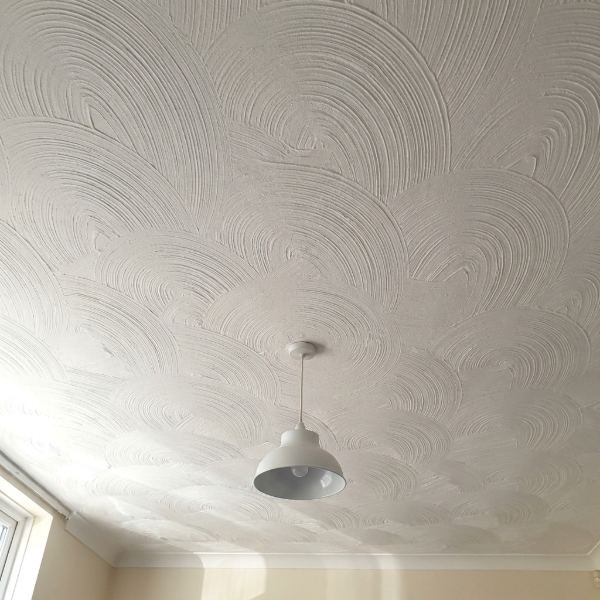
The result covers the material you sampled, from the place you sampled it. That's all, but it's a lot. If you sampled the Artex on the lounge ceiling, you now know about the lounge ceiling's coating.
It doesn't automatically cover:
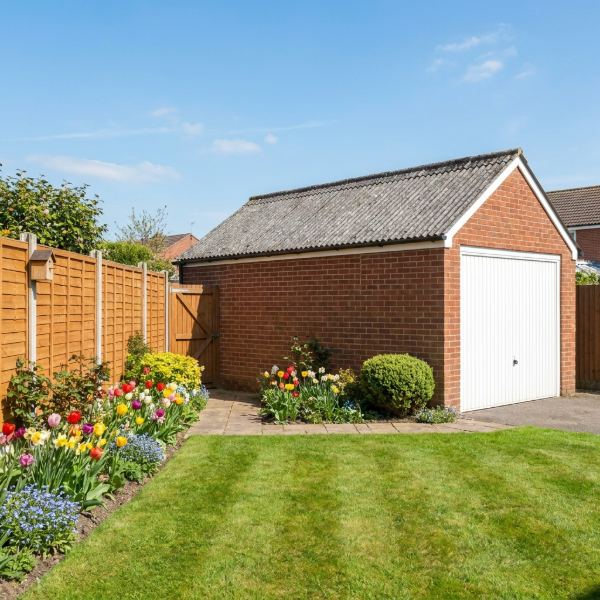
- Other ceilings or walls, especially if they were textured at a different time or in a different pattern.
- Patched or repaired areas of the same ceiling, which may be a different product.
- Layers you didn't reach. If your sample was mostly paint and only a little of the coating underneath, the lab mostly tested paint. HSE's survey guide says samples should be taken through the full depth of the material.
- The adhesive under a floor tile. The tile and the black adhesive can be different materials. One can contain asbestos while the other doesn't.
- Different tiles. HSE's survey guide says to take one sample from tiles of each type or colour.
What it can't tell you
It isn't an "asbestos-free certificate" for your home
No single sample can say that. HSE's survey guide says surveyors should only conclude a material is free of asbestos when there's strong evidence, and gives examples such as the building's age and the type of product. We'll never describe a result as an asbestos-free certificate, and you shouldn't let anyone else do so either.
Very small amounts can be hard to find
HSE is honest about this, and so are we. Its survey guide says some materials, "like textured plasters, paints and vinyl floor tiles, may contain very fine dispersed chrysotile asbestos", and that "laboratories often miss the fine asbestos" in them, so "some additional checks may be necessary". HSE's analysts' guide gives an example from a testing scheme where a sample with a very small amount of asbestos in a white powder was found by only a small share of the laboratories taking part.
What that means in practice:
- Take a good sample. Through the full depth, from a representative spot, not just a flake of paint.
- If anything makes you doubt it, for example the coating is from the 1970s, or you're about to sand or strip a large area, a second sample from another spot is a sensible extra check.
- For big jobs, such as stripping every ceiling or gutting a house, a professional refurbishment survey may be the better tool. A builder or contractor may ask for one anyway.
Can I go ahead with my work now?
For the material you tested: you can plan the work normally. A "not detected" result for your hallway Artex means the plasterer or electrician can treat that coating as ordinary coating.
Two sensible habits still apply:
- Keep dust down anyway. Sanding any old coating or filler makes fine dust you don't want to breathe.
- Stop if you find something new. If lifting a floor reveals a second layer of tiles, or opening a ceiling reveals old board, that's a new material. Test it before carrying on.
When to test again
| Situation | Test again? |
|---|---|
| Another room, textured at a different time or in a different pattern | Yes, one sample for that area |
| A patched or repaired area of the same ceiling | Yes, if you'll be disturbing it |
| Floor tiles of a different colour, or the adhesive under them | Yes, one each |
| The same material, same room, nothing new found | No |
| Starting a large renovation across the whole home | Consider a refurbishment survey |
Keep it, and share it
- Keep the certificate with your house papers, with a note or photo showing where each sample came from.
- Show it to tradespeople before they work on that material.
- If you sell, a buyer can see what was tested. Be clear about what wasn't. See selling a house with asbestos.
- Testing other areas? Start the free photo check and we'll suggest how many samples, so you test what matters and nothing you don't need.
- Only the lab can say what a material is. Kits are launching soon, and every sample will be analysed by a UKAS-accredited laboratory, named on every certificate.
Questions people ask
Is one asbestos test enough?
For one material in one area, usually yes. One test doesn't cover other ceilings, patched areas, different tiles or the adhesive underneath. Test each different material or area you plan to disturb.
Does "no asbestos detected" mean my house is asbestos-free?
No. It means no asbestos was found in the sample you sent. Other materials in your home may be different. No single test, and no photo, can show a whole home is free of asbestos.
Can a lab miss asbestos?
It's possible, especially where there's only a tiny amount of very fine asbestos. HSE's survey guide says this about textured plasters, paints and vinyl tiles in particular. A good sample through the full depth of the material helps the lab. If you have any doubt, a second sample from another spot is a sensible check.
Do I need to test every ceiling?
Only the ones you plan to disturb, and only once for each area textured at the same time in the same pattern. If two rooms look identical and were clearly done together, one sample may cover both. Our photo check can help you decide.
My tile came back clear. Is the black glue underneath clear too?
Not necessarily. The tile and the adhesive are different materials, and HSE's survey guide says bitumen adhesives could contain a few per cent of asbestos. If you're lifting the floor, test the adhesive as well.
Sources
- HSE, HSG248 Asbestos: The analysts' guide, 2nd edition 2021: para A2.6 (analytical sensitivity; testing-scheme example), para A2.7 (analytical sequence), para A2.30 and Box A2.1 (the "asbestos not detected" search): www.hse.gov.uk/pubns/priced/hsg248.pdf
- HSE, HSG264 Asbestos: The survey guide, 2nd edition 2012: para 38 (concluding that ACMs are absent), para 99 (fine dispersed chrysotile; "laboratories often miss the fine asbestos"), para 101 (full depth of the material), para 119 (one sample per tile type or colour), Appendix 2 (bitumen adhesives): www.hse.gov.uk/pubns/priced/hsg264.pdf
- Our own research notes (C), section 4b (claims we must not make: "asbestos-free certificate"), 22–23 Oct 2026.
- Our own research notes (B), section 4 (questions 16 and 27; "Is one asbestos test enough?"), 22–23 Oct 2026.
Updated 23 October 2026