Only a lab test can tell you for sure. Your photo helps us send the right kit.
Taking a sample is a small, careful job, and you can do it. Most people are done in about 10 minutes. This page takes you through it, step by step, with steps based on HSE guidance.
Worth testing: your kit has everything you need
Your home asbestos test kit comes with:
- an FFP3 disposable respirator (the mask)
- a disposable coverall
- single-use gloves
- a spray bottle, for misting the spot with water
- double sample bags: one bag for the sample, and a second to seal it in
- a step-by-step guide
- a return envelope, to post your sample to the lab
The only other things you'll want are a hand tool, such as a flat screwdriver or a small scraper, a plastic sheet or bin bag to put down underneath, a roll of tape, and a damp cloth.
What home kits are made for
These are the common, firmly bound materials in UK homes that a home kit is designed for:
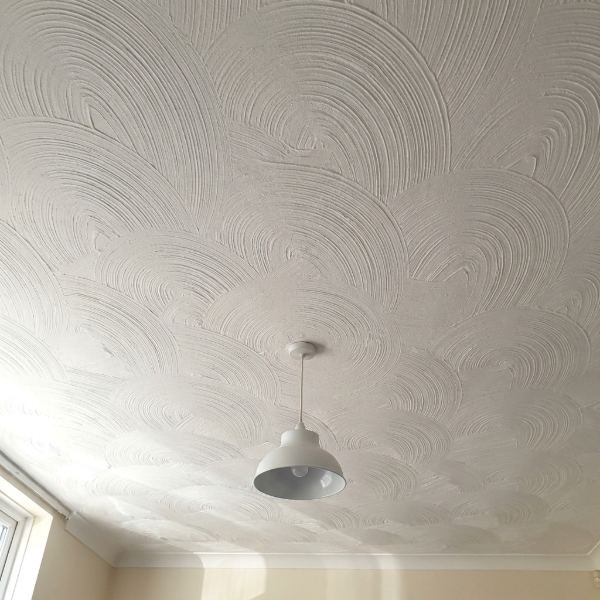
- Textured coatings such as Artex, on ceilings and walls. See our Artex guide.
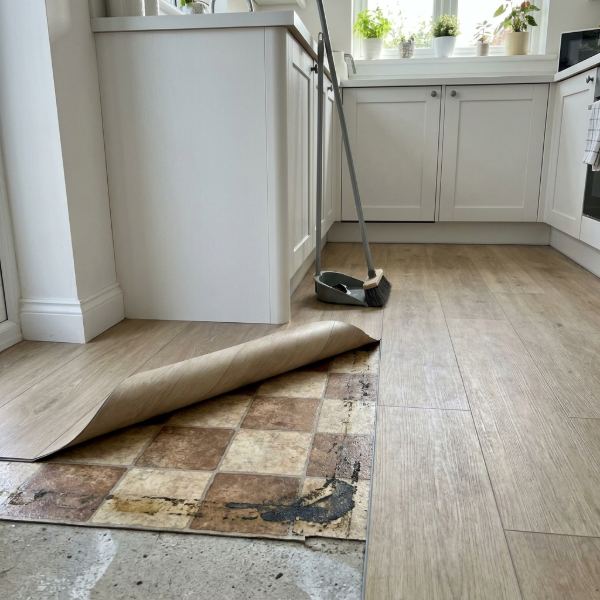
- Floor tiles, including old 9-inch squares, and the black adhesive under them. The tile and the adhesive can be different materials, so they may need a sample each. See floor tiles.
- Sheet vinyl flooring, taken from an edge.
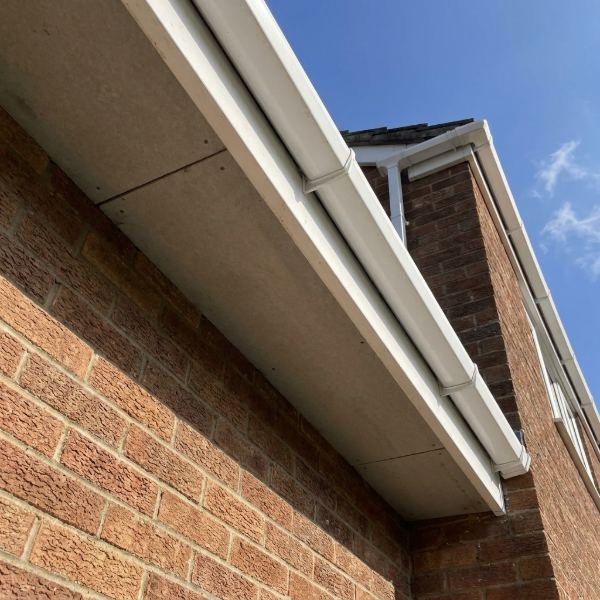
- Cement sheets and panels on sheds, garages, porches and extensions. See cement sheets.
- Garage and shed roofs, and wall sheets, taken from an edge you can reach standing on the ground. See garage roofs.
- Gutters and downpipes, from a part you can reach from the ground.
- Soffits, where you can reach an edge from the ground.
- Cement flue pipes, from a cold end, with the boiler or fire switched off and cooled.
- Cement water tanks, usually in the loft, from the top edge.
- Window putty and mastic, and old sealant round frames.
- Bitumen felt on sheds, garages and flat roofs, from an edge you can reach from the ground.
Not sure which one you're looking at? Send us a photo and we'll tell you what's worth testing, and how many samples.
Take your sample in about 10 minutes, step by step
HSE's survey guide for professionals describes taking a small piece through the full depth of the material, misting it first and putting it straight into a sealable bag. These steps follow the same approach.
- Clear the room. Ask other people and pets to wait in another room while you work, and close the door.
- Put a plastic sheet down under the spot, to catch any bits.
- Put on your coverall, gloves and FFP3 mask. The mask seals against your skin, so be clean-shaven: HSE says stubble stops this kind of mask sealing properly.
- Mist the spot with water from the spray bottle. Damp material gives off far less dust.
- Take a small piece. Hold the open bag just underneath. With your hand tool, take a piece about the size of a 20p coin, through the full depth of the material, straight into the bag. Choose an out-of-the-way spot, such as a corner, the edge of a sheet or the edge of a tile.
- Seal the bag, then put it inside the second bag and seal that too.
- Label it with where the sample came from, for example "kitchen ceiling" or "garage roof, back edge". A photo of the spot helps too.
- Seal the spot with a strip of tape or a dab of paint.
- Damp-wipe the tool, the area and the plastic sheet. Fold the sheet in on itself.
- Bag everything else. Take off the coverall and gloves, then the mask last, and seal them in a bag with the wipes and the sheet. Your local council can tell you how to get rid of it.
Then post your sample to the lab in the return envelope.
Roofs, gutters and anything up high
For garage roofs, wall sheets, soffits, gutters and felt, the sample comes from an edge you can reach standing on the ground. Old cement sheets are brittle, and HSE's survey guide says roof sampling needs special safety precautions, so staying on the ground is the safe, simple way to do it. A gutter, downpipe or lower edge on the same building is often the easiest place. If nothing is in reach from the ground, send us a photo and we'll help you find the best spot.
How many samples?
One for each different material, colour or area. Ceilings textured at different times count separately. Floor tiles of different colours count separately, and the adhesive may need its own. Our free photo check suggests a number for you, and the kit is £44.99 with one lab sample, with each extra sample £12.
After you post it
Your sample will be analysed by a UKAS-accredited laboratory, named on every certificate, and your result will come to you by email, in writing. Only the lab can tell you for sure. See what your result means.
- Not sure which material it is? Start the free photo check. We'll point at what's worth testing and how many samples. We'll never tell you something "is asbestos" from a picture. Only the lab can tell you for sure.
- Kits are launching soon. Your sample will be analysed by a UKAS-accredited laboratory, named on every certificate.
Questions people ask
Is it safe to take a sample myself?
For the materials home kits are made for, yes, with the kit and the steps above. Taking a sample doesn't need a licence: HSE lists collecting samples as non-licensed work, even for people doing it as their job. The mask, coverall, gloves, misting and double bags are there so you can do it carefully and confidently.
How big should the sample be?
Small. HSE's survey guide suggests about 3 to 5 cm² of surface, taken through the full depth of the material. That's roughly the size of a 20p coin. For cement it suggests about 5 cm², so the lab can search properly for the rarer types.
How many samples do I need?
One for each different material, colour or area. If the kitchen and the hall ceilings were done in different years or patterns, that's two. Our photo check will suggest a number.
What if it's on a roof?
Take your sample from an edge you can reach standing on the ground, or from a gutter or downpipe on the same building. That's the safe way to sample a roof at home. If nothing is in reach from the ground, send us a photo and we'll help.
What do I do with the mask and gloves afterwards?
Seal them in a bag with the coverall, the wipes and the plastic sheet. Your local council can tell you how to get rid of the bag where you live.
Sources
- HSE, Non-licensed work (collecting samples listed as non-licensed work; textured coatings; floor tiles; cement), updated 2024-02-23: www.hse.gov.uk/asbestos/licensing/non-licensed-work.htm
- HSE, HSG264 Asbestos: The survey guide, 2nd edition 2012: para 101 (samples of about 3–5 cm², full depth), paras 110–120 (how samples are taken: misting, sealable bags, labelling; roofs; about 5 cm² for cement): www.hse.gov.uk/pubns/priced/hsg264.pdf
- HSE, Asbestos essentials EM6, PPE including RPE (FFP3; disposable overalls and gloves; beards and stubble) (09/17): www.hse.gov.uk/pubns/guidance/em6.pdf
- HSE, Asbestos essentials index (trade task sheets for textured coatings, floor tiles and cement): www.hse.gov.uk/asbestos/essentials/index.htm
Updated 24 October 2026