Only a lab test can tell you for sure. Your photo helps us send the right kit.
Sometimes you find a name: along the edge of a roof sheet, on the back of a board, under a floor tile. And the question is always the same. Does that name mean asbestos?
The rule that comes first
A name tells you who made a product, and roughly what it was. It doesn't tell you when your piece was made, or what's in it. Some names belonged to asbestos products, some to the asbestos-free products that replaced them, and a few were used for both. So a name is a clue, never an answer. Only the lab can tell you what your material is.
Most names here come from the appendix of HSE's guide for asbestos surveyors (HSG264). Where we've used other sources, or couldn't confirm something, we say so.
Everite, Turnall and other cement names
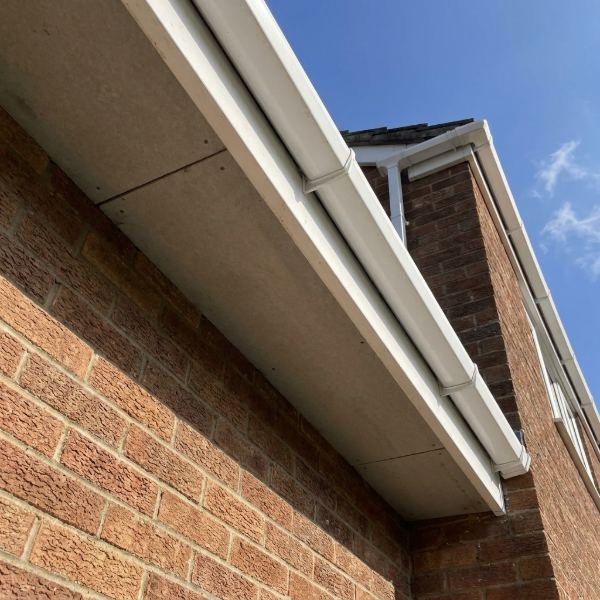
What we know. Everite was a brand of asbestos cement. Grace's Guide, an archive of British industrial history, records Turners Asbestos Cement Co, part of the Turner and Newall group, listing Everite, Poilite and Turnall as its brand names for asbestos cement building products in 1937.
HSE's survey guide lists Everite and Turnall among the names on asbestos cement slates, boards, cisterns, pipes, flues and rainwater goods, and "Bigsix", "Doublesix" and "Supersix" among the names for corrugated roof sheets.
HSE puts the asbestos content of corrugated cement sheets at about 10 to 15%. White asbestos was by far the most common type, but blue (between 1950 and 1969) and brown (between 1945 and 1980) were also used.
What we couldn't confirm. Whether every product with these names contained asbestos, or when each name stopped being used on asbestos products. Treat any of them as worth testing, and never climb onto a roof to read a stamp: old sheets can give way underfoot. See garage roofs.
Asbestolux and Supalux
The names look alike. The boards are very different.
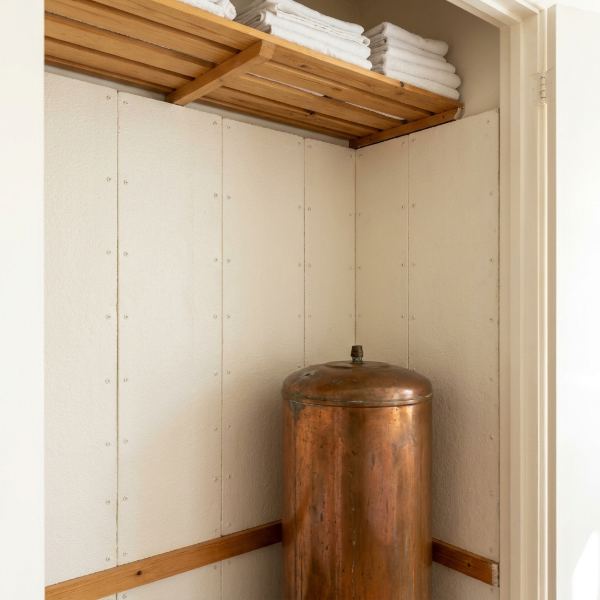
Asbestolux. HSE's survey guide lists Asbestolux as a trade name for asbestos insulating board (AIB), alongside "Turnasbestos", "LDR" and "asbestos wallboard". It says insulation board usually contains 15 to 25% brown asbestos (amosite), or a mix of brown and white, and that manufacture ceased in 1980. A board stamped Asbestolux should be treated as insulation board. Don't sample it yourself. Send us a photo first.
Supalux. HSE's survey guide refers to "non-asbestos board (Supalux or Masterboard)". Supalux is still made today: its maker, Promat, describes it as a calcium silicate board "formulated without inorganic fibres".
What a Supalux stamp can't tell you. It tells you about that one board. The board next to it may be different: HSE's guide notes that insulation board tiles were often replaced, and that some replacements look the same as the originals. We also couldn't confirm when Supalux first replaced asbestos boards; the sources we found disagree. If boards are mixed, unmarked, or you're not sure, treat them as insulation board until a professional says otherwise.
Marley and other thermoplastic floor tiles
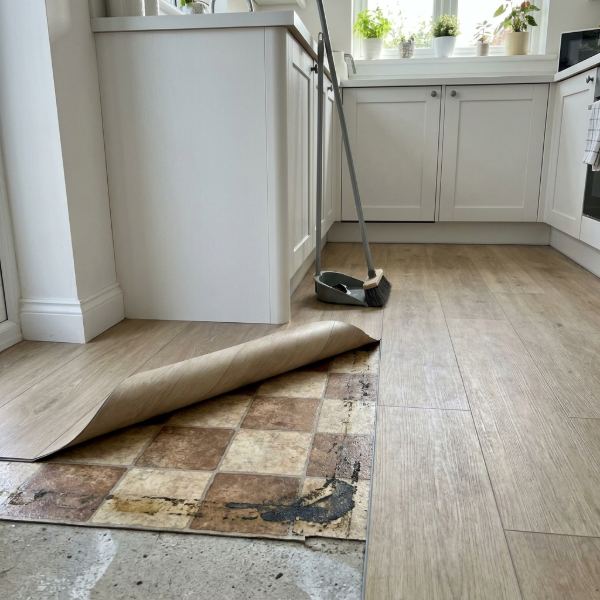
What we know. A 1953 Building Research Station digest on thermoplastic floor tiles says they were "most frequently described as Accotile, Marley tile or Semastic tile". So Marley was one of the best-known names on the floors laid in the post-war years.
HSE's survey guide says thermoplastic floor tiles contained up to 25% asbestos, and that vinyl (PVC) tiles normally contained about 7% white asbestos, very finely spread through the tile. It says black and brown thermoplastic tiles could contain larger amounts. It also says the bitumen adhesives used to stick floors down could contain a few per cent of white asbestos, and were used up to 1992.
What we couldn't confirm. Which Marley products contained asbestos. We haven't found a reliable public list. If you're lifting old tiles, test a tile and the adhesive under it separately. See floor tiles.
Zonolite and vermiculite in the loft
What we know. Vermiculite is a mineral that was poured into lofts as loose insulation. The US Environmental Protection Agency says a mine near Libby, Montana, supplied over 70% of the vermiculite sold in the United States from 1919 to 1990, that it was "often sold under the brand name Zonolite", and that it was contaminated with asbestos. The EPA describes it as pebble-like, usually grey-brown or silver-gold.
HSE's survey guide mentions vermiculite loft insulation as something surveyors should look underneath.
What we couldn't confirm. How much Zonolite, or Libby vermiculite, was sold in the UK. We found no official UK record.
What to do. Treat vermiculite as loose fill: never sample it yourself. The EPA advises leaving it undisturbed and not storing things in that loft. For any loft work, get a professional. See sprayed coatings and loose fill.
Polystyrene ceiling tiles
What we know. Polystyrene is a plastic foam, very light and usually white. It isn't one of the materials in HSE's list of asbestos products.
The catch. Not every white ceiling tile is polystyrene. HSE's survey guide lists ceiling tiles among the uses of asbestos insulation board. A hard, heavy tile that's screwed in, rather than stuck on, is worth a photo before you touch it.
What we couldn't confirm. Whether the adhesives once used to stick polystyrene tiles up contained asbestos. If you're scraping old adhesive off a ceiling, test it first.
Textured paint versus Artex
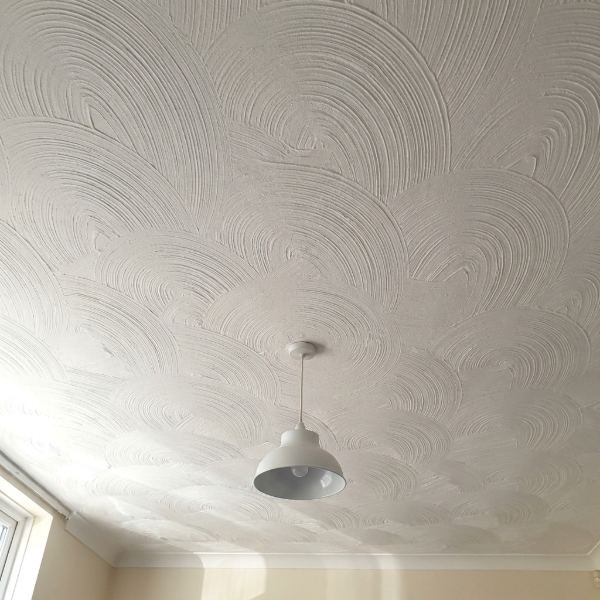
What we know. Artex is a trademark of Artex Ltd, part of the French Saint-Gobain group since 2005, that became an everyday word for any textured coating.
HSE's survey guide names other textured products: "Wondertex", "Suretex", "Newtex", "Pebblecoat" and "Marblecoat". It says these "usually contained a few per cent of chrysotile asbestos". It also says asbestos was added to textured coatings until about 1984, that old stock may have been used for several more years, and that non-asbestos versions were available from the mid-1970s.
Textured paint. HSE's guide lists "textured plasters, paints" among materials that may contain very fine asbestos. So whether your ceiling was combed into a pattern or rolled on as a thick paint, the advice is the same: test before sanding, scraping or drilling. See Artex.
Other names you might find
All from HSE's survey guide:
| Name | What it was |
|---|---|
| Limpet | Sprayed coating. The name was also used for non-asbestos sprays. Never sample. |
| Caposil, Caposite | Insulation slabs and pipe sections containing brown asbestos. Never sample. |
| Turnasbestos, LDR | Insulating board. Don't sample yourself. |
| Marinite, Shipboard | Marine insulating boards, some up to 40% asbestos. Don't sample yourself. |
| Poilite | Flat cement sheet and partition board. |
| Novilon | Vinyl sheet flooring with an asbestos paper backing, more common in Europe. |
| Pax felt, Serval | Asbestos paper and felt products. |
| Klingerit | Gaskets, often in boilers and pipework. Leave alone. |
| Siluminite | Reinforced plastic. |
| Sindanyo | High-grade cement board. |
- Send us a photo of the name or stamp, and one of the whole item: start the free photo check.
- We'll point at what's worth testing, and tell you if it's something you shouldn't touch. A name is a clue; only the lab can say what a material is.
- Kits are launching soon. Your sample will be analysed by a UKAS-accredited laboratory, named on every certificate.
Questions people ask
Does "Everite" on my garage roof mean it's asbestos?
Everite was a brand of asbestos cement products, and HSE's guide lists it among asbestos cement names. That makes the sheet well worth testing, but a name alone doesn't prove what one sheet is made of. Only take a sample from an edge you can reach from the ground. Never climb on the roof.
Is Supalux asbestos?
HSE's survey guide describes Supalux as a non-asbestos board, and it's still made today without inorganic fibres. The risk is assuming every board nearby is the same. Boards were often replaced, so treat unmarked or mixed boards as possible insulation board.
Did Marley floor tiles contain asbestos?
HSE says thermoplastic floor tiles of that era could contain up to 25% asbestos, and Marley was one of the best-known names on them. We haven't found a reliable list of which Marley products did. Test the tile and the adhesive separately before lifting them.
Is the vermiculite in my loft asbestos?
You can't tell by looking. The US EPA says much of the vermiculite sold as Zonolite was contaminated with asbestos, and we can't rule out that some reached UK lofts. Treat it as loose fill: don't disturb it, don't sample it, and get a professional for any loft work.
Sources
- HSE, HSG264 Asbestos: The survey guide, 2nd edition 2012: Appendix 2 (product names, asbestos content and dates for cement, insulation board, flooring, bitumen, textured coatings, lagging, sprays, gaskets, plastics), Appendix 3 paras 13 and 15 (textured coatings; flooring), Appendix 1 para 23 ("non-asbestos board (Supalux or Masterboard)") and para 28 (vermiculite loft insulation), para 99 (textured plasters and paints), para 38 (1988 prohibition): www.hse.gov.uk/pubns/priced/hsg264.pdf
- HSE, Asbestos essentials index (A2, removing a screwed-in AIB ceiling tile): www.hse.gov.uk/asbestos/essentials/index.htm
- Grace's Guide to British Industrial History, Turner's Asbestos ("Everite", "Poilite" and "Turnall", 1937): www.gracesguide.co.uk/Turner%27s_Asbestos
- Building Research Station Digest No. 57 (1st series), Thermoplastic flooring tiles, 1953, as listed by the BRE bookshop (seen 23 Oct 2026): bregroup.com/store/bookshop/thermoplastic-flooring-tiles.
- Promat, SUPALUX product page ("calcium silicate board ... formulated without inorganic fibres"), seen 23 Oct 2026: promat.com/-/contenthub/en-GB/product/pi8175/52525
- US EPA, Protect your family from asbestos-contaminated vermiculite insulation, updated 17 April 2026: www.epa.gov/asbestos/protect-your-family-asbestos-contaminated-vermiculite-insulation
- Wikipedia, Artex (trademark of Artex Ltd; Saint-Gobain since 2005; genericised trademark), seen 23 Oct 2026: en.wikipedia.org/wiki/Artex
- Our own research notes (B), section 5, gap G5 (no competitor page on these names), 22–23 Oct 2026.
Updated 23 October 2026